
Effect of liquid humus on biological and agricultural productivity of cabbage (Brassica oleracea L.) var. Capitata cv. ´Hercules 31´
Article Sidebar
Main Article Content
Abstract
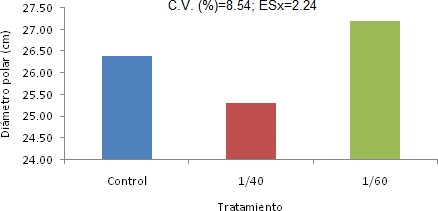
To evaluate the obtained in Cuba in indicators of growth and yield in the crop of under intensive orchard conditions, an experiment was carried out in areas of the orchard Intensive of the 100 ha of the Guayabal farm, belonging to the endogenous Cuba-Venezuela project of the Institute of Animal Science (ICA), located in San José de Las Lajas, province of Mayabeque, in the period between December 2012 and February 2013. The liquid humus was obtained from vermicompost, and applied to the foliage in dilutions 1/40 and 1/60, v/v, and a control in the absence of it. Increased number of leaves, root length, equatorial and polar diameter and fresh mass were found. The plants treated, compared to the control, reached the highest values of agricultural yields.
Article Details

This work is licensed under a Creative Commons Attribution-NonCommercial 4.0 International License.
Those authors who have publications with this journal accept the following terms of the License Attribution-NonCommercial 4.0 International (CC BY-NC 4.0):
You are free to:
- Share — copy and redistribute the material in any medium or format
- Adapt — remix, transform, and build upon the material
The licensor cannot revoke these freedoms as long as you follow the license terms.
Under the following terms:
- Attribution — You must give appropriate credit, provide a link to the license, and indicate if changes were made. You may do so in any reasonable manner, but not in any way that suggests the licensor endorses you or your use.
- NonCommercial — You may not use the material for commercial purposes.
- No additional restrictions — You may not apply legal terms or technological measures that legally restrict others from doing anything the license permits.
The journal is not responsible for the opinions and concepts expressed in the works, they are the sole responsibility of the authors. The Editor, with the assistance of the Editorial Committee, reserves the right to suggest or request advisable or necessary modifications. They are accepted to publish original scientific papers, research results of interest that have not been published or sent to another journal for the same purpose.
The mention of trademarks of equipment, instruments or specific materials is for identification purposes, and there is no promotional commitment in relation to them, neither by the authors nor by the publisher.
How to Cite
References
Camacho, F. y Díaz de Armas, M. (2011). Efecto de bioestimulantes inocuos de origen natural en brassicas. La biodesinfección para el control de patógenos del suelo. Ediciones Agrotécnica S.L.España .ISBN13:978- 84-87480-82-9
Canellas, L.P. y Olivares, F.L. (2014). Physiological responses to humic substances as plant growth promoter. Chemical and Biological Technologies in Agriculture, 1 (1): 3-10.
Calderin, A.; Guridi, F.; Martinez, D.; Diaz de Armas, M.; Artega, M.; Mesa, S. y Louro, R. (2016). Vermicompost- Derived liquid humus in low input and small-scale farming. https://www.researchgate.net/publicatio n/287195349
Caron, V.C. (2015). Condicionadores do solo: ácidos húmicos e fúlvicos. Piracicaba: ESALQ/USP.
Manea, A. (2017) Fertilizer type on cabbage growth and yield . International Journal of Vegetable Science.v.23 n.6
Melo, D. ; Borges, E, ; Laecio da Silva, A. y Sausa, M. (2016). Agronomic performance and soil chemical attributes in a banana tree orchard fertigated with humicsubstances. Pesq. Agropec. Trop., Goiânia, v. 46, n. 4, p. 421-428, Oct. / Dec. 2016.
Dotaniya, M.L.; Datta, S.C.; Biswas, D.R. y Kumar, K. (2014). Effect of organic sources on phosphorus fractions and available phosphorus in TypicHaplustept. J. Indian Soc. Soil Sci., 62(1): 80-83.
Goswami, L.; Pratihar, S.; Dasgupta, S.; Bhattacharyya, P.; Mudoi, P.; Bora, J.; Bhattacharya, S.S. y Kim, K.H. (2016). Exploring metal detoxification and accumulation potential during vermicomposting of Tea factory coal ash: sequential extraction and fluorescence probe analysis. Sci. Rep., 6: 30402. http://dx.doi.org/10.1038/srep30402.
Hernández, O. (2010). Modificaciones al proceso de obtención de sustancias húmicas a partir de vermicompost: efectos biológicos. Tesis de Maestría en Ciencias de la Química Agrícola. UNAH. La Habana. Cuba.
Hernández, L.; Guridi, F.; Huelva, R.; Martínez, D. y Arteaga, M. (2016). Efectos de un extracto de sustancias húmicas sobre indicadores de la productividad biológica y bioquímico- fisiológicos en plántulas de tomate (Solanum lycopersicum L.) de las variedades Mariela y Mara. Revista UT Ciencia, 3 (1), Ecuador.
Huelva, R.; Hernández, O.; Martínez, D. y Guridi, F. (2012). Distribución de p-foliar asociado a diferentes moléculas orgánicas en plantas de maíz (Zea mayz. var. P-7928) tratadas con sustancias húmicas líquidas por vía radicular y foliar. En: Memorias XVIII Congreso Científico del INCA CD ISBN 978-959-7023-62-3.
Huerres, C. y Caraballo, N. (1988). Horticultura. Editorial Pueblo y Educación, 55 - 69.Cuba
Mesa, S.; Diaz de Armas, M.M. y Krieger, J. (2010). Resultados obtenidos en la producción de vegetales con dos extractos húmicos líquidos en el departamento de química de La Universidad Agraria de La Habana. Impacto sobre propiedades físicas y químicas del suelo. En Memorias XVII Congreso Científico del INCA.CD. ISBN 979-059-7023-48-7
Mesa, G. (2015). Efecto de humus liquido sobre coliflor desarrollada en la finca El Conde Tesis presentada en opción al Título de Máster en Agroecología y Desarrollo Sostenible. Facultad de Agronomía UNAH.
MINAGRI (2002). Guía para el cultivo de la col en Cuba. Habana, Cuba. Ministerio/ proyectos/world/ink.
Payeras, A. (2017). Ácidos húmicos y fúlvicos en bonsái. BONSAI MENORCA 2017.Disponible en:
http://www.bonsaimenorca.com/articulos/articulos-tecnicos/acidos-humicos-y-acidos-fulvicos/. (consultado en Febrero, 2018) Povero, G.; Mejía, J.; Tommaso, D.; Piaggesi, A. y Warrior, P. (2016). A systematic approach to discover and characterize natural plant biostimulants. Plant Science, 7:435
Vilches, E. (2009). Regulación de las poblaciones de insectos nocivos en el cultivo de la col (Brassica oleracea L.) mediante alternativas orgánicas. Tesis en opción al título de Máster en Agroecología y Agricultura Sostenible. UNAH.