
Antagonist activity of Cladobotryum, Beltraniopsis, Beltraniella and Beltrania strains against Fusarium chlamydosporum
Article Sidebar
Main Article Content
Abstract
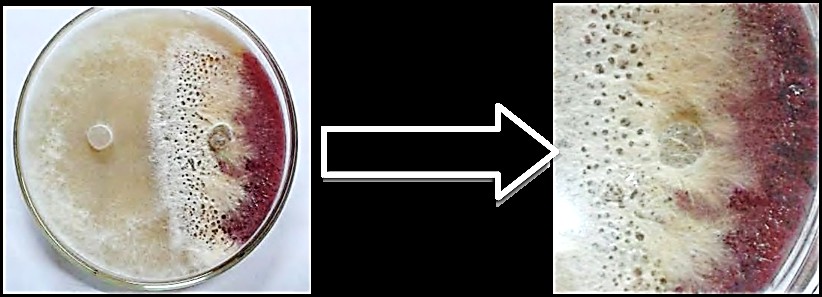
On the present paper were determinated the antagonist activity of strains: C. pinarense (1789), C. semicirculare (1698), C. virescens (C10/110), Beltraniopsis sp. (1308), Beltraniella havanensis (C08/104) and Beltrania rhombica (2432), preserved on International recognized World Federation Culture Collections (WFCC 853) at INIFAT, against Fusarium chlamydosporum pathogen, by Dual Culture Method. The Cladobotryum species had high antagonism against F. chlamydosporum acting by mycoparasitism, also favored this effect by the higher capacity of the strains to compete for the substrate, the rest of strains did not show a significant activity. Those new results are good for going on studying in these species referred to obtaining bioproducts to control of fungal diseases on Integrated Management Program (IMP) and Agroecologic Management Pest (AMP).
Article Details

This work is licensed under a Creative Commons Attribution-NonCommercial 4.0 International License.
Those authors who have publications with this journal accept the following terms of the License Attribution-NonCommercial 4.0 International (CC BY-NC 4.0):
You are free to:
- Share — copy and redistribute the material in any medium or format
- Adapt — remix, transform, and build upon the material
The licensor cannot revoke these freedoms as long as you follow the license terms.
Under the following terms:
- Attribution — You must give appropriate credit, provide a link to the license, and indicate if changes were made. You may do so in any reasonable manner, but not in any way that suggests the licensor endorses you or your use.
- NonCommercial — You may not use the material for commercial purposes.
- No additional restrictions — You may not apply legal terms or technological measures that legally restrict others from doing anything the license permits.
The journal is not responsible for the opinions and concepts expressed in the works, they are the sole responsibility of the authors. The Editor, with the assistance of the Editorial Committee, reserves the right to suggest or request advisable or necessary modifications. They are accepted to publish original scientific papers, research results of interest that have not been published or sent to another journal for the same purpose.
The mention of trademarks of equipment, instruments or specific materials is for identification purposes, and there is no promotional commitment in relation to them, neither by the authors nor by the publisher.
How to Cite
References
Abdel-Hafez, Sobhy I. I.; Ismail, M. A; Hussein, N. A. y Abdel-Hameed N. A. (2014). Fusarium species and other fungi associated with some seeds and grains in Egypt, with 2 newly recorded Fusarium species. Journal of Biology and Earth Sciences, 4 (2): B120-B129.
Bastos, C.N., H.C. Evans y R.A. Samson. (1986). Metabolitos de Cladobotryum amazonense sp. nov. con actividad antibiótica de amplio espectro. Fitopatología Brasileña., 86(4): 571-8.
Bernal, A., C. Andreu y M. Moya. (2004). Utilización de Trichoderma spp. como alternativa ecológica para el control de Fusarium oxysporum f. sp. cubense (E.F.Smith) Snyd.& Hans. Cuba. (Consulta: 22 de abril, 2015). Disponible en: http://www.virtualcentr.org/es/enllBTJ%20Tallr/be rnalalezander.htm.
Bills, Gerald F.; Platas, G; Overy, D.P.; Collado, J.; Fillola, A.; Jiménez, M.R.; Martín, J.; Del Val, G.A.; Vicente, F.; Tormo, J.R.; Pelaez; F.; Calati, K; Harris, G., Parish, C.; Xu, D.; Roemer, T. (2009). Discovery of the parnafungins, antifungal metabolites that inhibit mRNA polyadenylation, from the Fusarium larvarum complex and other Hypocrealean fungi. Mycologia, 101(4): 449–472.
Bojanicha, María Viviana; Sarmientob, María Mercedes; Giusianob, Gustavo; Mangiaterrab, Magdalena y Basualdoc, Juan Ángel. (2015). Huevos de Toxocara canis como anzuelo para hongos geófilos en una ciudad subtropical. Revista Iberoamericana de Micología. 32(4):273– 276.
Centraalbureau Voor Schimmelcutures (CBS). (2001). List of cultures. Fungal Biodiversity Center. 35th Edition, ISBN 90-70351-45-5: 687 p.
Das, I. K., Vijay Kumar, B. S., Ratnavathi, C. V., Komala, A., Annapurma, A. and Seetarama, N. (2010). Toxigenicity of Fusarium isolates and fumonisin B1 contamination in the rainy season sorghum. (Sorghum biocolor). Indian Journal of Agricultural Sciences, 80: 724 – 729.
Goh Yit Kheng , Nurul Fadhilah Marzuki, Teik Khiang Goh , Suet Yee Tan, You Keng Goh y Kah Joo Goh. (2016). Mycoparasitic Scytalidium parasiticum as a potential biocontrol agent against Ganoderma boninense basal stem rot in oil palm. Biocontrol Science and Technology, 26 (10): 1352–1365.
Guédez, C.; Cañizaleza, L.; Castillos, C. y Olivarb, R. (2012). Evaluación in vitro de aislamientos de Trichoderma harzianum para el control de Rhizoctonia solani, Sclerotium rolfsii y Fusarium oxysporum en plantas de tomate. Revista de la Sociedad Venezolana de Microbiología, 32:44- 49.
Hoyos, Carvajal L.; Duque, G.; Orduz.S. (2008). Antagonismo in vitro de Trichoderma spp. sobre aislamientos de Sclerotinia spp. y Rhizoctonia spp .Revista Colombiana de Ciencias Hortícolas, 2 (1): 76-86.
Juárez-Becerra, G.P.; Sosa Morales, M.E y López, Malo A. (2010). Hongos fitopatógenos de alta importancia económica: descripción y métodos de control. Temas selectos de Ingeniería de Alimentos, 4-2: 14-23.
Kanai, Y., T. Yoshiyuki, T. Toshiyuki, W. Yoko, F. Tsukasa, I. Daisuke, y O. Toru. (2005). F2928-1 and 2, new antifungal antibiotics from Cladobotryum sp. The Journal of antibiotics. 58(8): 507-13, Database: MEDLINE
Llorent E.J.; Fernández de Córdoba, M.L; Medina, A.R. y Ortega, B.P. (2012). Fluorimetric determination of thiabendazole residues in mushrooms using sequential injection analysis, Talanta 96: 190-194.
Martínez, B.; Reyes, Y.; Infante, D.; González, E.; Baños, H. y Cruz, A. (2008). Selección de aislamientos de Trichoderma spp. candidatos a biofungicidas para el control de Rhizoctonia sp. en arroz. Rev, Protección Veg., 23 (2):118-125.
Moreno, Pérez P; Gamboa, M. A.; Heredia, G.; B Canto Canché; Rodríguez, García C.M, Baizabal, M. IL; Echeverría, P. L. (2016). Evaluación antimicrobiana de extractos obtenidos de micromicetos tropicales contra fitopatógenos. ɸYTON ISSN 0031 945785: 7-14.
Negri, Melyssa; Salci, Tânia P.; Shinobu-Mesquita, Cristiane S.; Capoci, Isis R. G.; Svidzinski, Terezinha I. E. and Kioshima, Erika Seki. (2014). Review Early State Research on Antifungal Natural Products. Molecules, 19: 2925-2956.
O’Donnell, Kerry; Humber, Richard A; Geiser, David M., Vincent A.R.G. Robert; Johnston, Peter R.; Rooney, Alejandro P.; Rehner, Stephen A. (2012). Phylogenetic diversity of insecticolous fusaria inferred from multilocus DNA sequence data and their molecular identification via Fusarium-ID and Fusarium MLST. Mycologia, 104(2): 427–445.
Reyes, M.E., G.H. Abarca y M.G. Angulo. (2008). Perfil biológico de hongos anamórficos del sureste de México. Revista Mexicana de Micología. 28: 49-56. ISSN 0187-3180.
Tegene S.; Tessema, T y Yirefu, F. (2014). Host specificity test of potential indigenous biocontrol fungal pathogens of water hyacinth against economically important plants in the Ethiopian Rift Valley. Journal of Research in Environmental Science and Toxicology, 3(4): 46-50.
Tittlemier, Sheryl A.; Roscoe, Mike; Trelka, Robert; Jason, Don Gaba; Chan, M..; Patrick, Susan K.; Sulyok, Michael ; Krska, Rudolf; McKendry, Twylla and Gräfenhan, Tom.(2013).m Fusarium Damage in Small Cereal Grains from Western Canada. 2. Occurrence of Fusarium Toxins and Their Source Organisms in Durum Wheat Harvested in 2010. J. Agric. Food Chem., 61:5438−5448.