
Cryobank: Their importance for preservation to long time in the germplasm bank
Article Sidebar
Main Article Content
Abstract
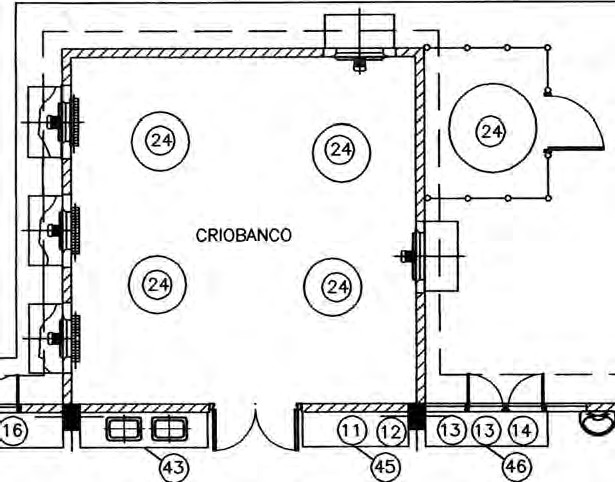
Cultivation and preservation of many species becomes difficult due to problems correlated with production or manipulation of the seed (botany or agamic) and his storage, it acts against of diversity and riches of vegetable species existent. For this reason, one of current strategic objectives refers to the establishment and use of the techniques of preservation in vitro and cryopreservation, as an alternative additional to the collections of entire plants. In the present moment, germplasm's banks that preserve the plant genetic resources of any country it must have banks of seed, genebanks in vitro and cryobanks to guarantee the preservation of all its resources. The objective of this work was to develop a study for the implementation of a cryobank in germplasm's bank of INIFAT. From the 2006, in the INIFAT has advanced to develop of techniques and successful protocols for cryopreserver garlic, this it constitutes the first step for the preservation of a species in a cryobank. During the 2014, in the INIFAT it make a feasibility study to accomplish an investment at the construction of new germplasm's bank for the preservation of plant genetic resources of the country, so that a cryobank's projection was not left out . Enter the principal results of this work it was a cryolaboratorio's design, the security measures and the necessary equipment for this establishment.
Article Details

This work is licensed under a Creative Commons Attribution-NonCommercial 4.0 International License.
Those authors who have publications with this journal accept the following terms of the License Attribution-NonCommercial 4.0 International (CC BY-NC 4.0):
You are free to:
- Share — copy and redistribute the material in any medium or format
- Adapt — remix, transform, and build upon the material
The licensor cannot revoke these freedoms as long as you follow the license terms.
Under the following terms:
- Attribution — You must give appropriate credit, provide a link to the license, and indicate if changes were made. You may do so in any reasonable manner, but not in any way that suggests the licensor endorses you or your use.
- NonCommercial — You may not use the material for commercial purposes.
- No additional restrictions — You may not apply legal terms or technological measures that legally restrict others from doing anything the license permits.
The journal is not responsible for the opinions and concepts expressed in the works, they are the sole responsibility of the authors. The Editor, with the assistance of the Editorial Committee, reserves the right to suggest or request advisable or necessary modifications. They are accepted to publish original scientific papers, research results of interest that have not been published or sent to another journal for the same purpose.
The mention of trademarks of equipment, instruments or specific materials is for identification purposes, and there is no promotional commitment in relation to them, neither by the authors nor by the publisher.
How to Cite
References
Cryobank. Page compiled by: Bioversity International/ILRI, Addis Ababa, Ethiopia (Alexandra Jorge); ILRI, Addis Ababa, Ethiopia (Jean Hanson); Katholieke Universiteit Leuven, Belgium (Bart Panis).
Dussert S, Engelmann F, Noirot M. 2003. Development of probabilistic tools to assist in the establishment and management of Cryopreserved plant germplasm collections. Cryoletters 24:149-160.
Fki L, Bouaziz N, Sahnoun N, Swennen R, Drira N and Panis B. (2011): Palm cryobanking. Cryoletters 32: 451-462.
Marco-Medina, A. y F. Serrano-Martínez (2012): Crioconservación: herramienta para la conservación ex situ de material vegetal. Cuadernos de Biodiversidad, 38: 9-12.
Panis B. (2008): Cryopreservation of monocots. En: Reed, BM (ed) Plant Cryopreservation: A Practical Guide (pp. 241-280), Springer, USA.