
Effect of the organominerales on extraña rosa flower production (Callistephus chinensis) in Red Ferralític soils
Article Sidebar
Main Article Content
Abstract
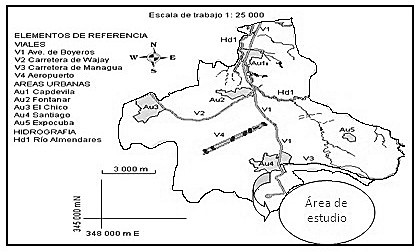
The subprogram of ornamental plants and flowers of the National Movement of Urban and Suburban Agriculture has favoured the increase in the number of farmers cultivating these species in the whole country. However, there is a deficit in flower production in the municipality of Boyeros, which can be increased by improving the soil quality. The aim of this work was to study the effect of organ-mineral fertilizers on soil quality for extraña rosa flower (Callistephus chinensis) production in the farm CCS Fructuoso Rodríguez, located in the location. The main characteristics of the farm were described. Soil samplings were carried out and the morphological description of soil profiles were determined. Five treatments with three repetitions were used: Absolute T1-Control, T2-100% Mineral fertilizers (MF), T3-25% humus Worm humus (WH)+75%MF, T4-50WH+50%MF and T5-75WH+25%MF. The results indicated that the best variant was 50% WH+ 50% MF (150-100-225 kg/ha of NPK and 4t/ha of WH), showing the highest yields and longer plant heights. It was also noted that Red Ferralitic soils cultivated with flowers in this location were characterized by a low contents of organic matter (below 2%), which can be attributed to an inadequate agricultural management of these soils that contributes to their degradation. Emphasis is made in the necessity of carrying out applications of organic matter; crop rotation and other practices that favored the best use and conservation of the soils; not only from the nutritional point of view but also to improve their properties.
Article Details

This work is licensed under a Creative Commons Attribution-NonCommercial 4.0 International License.
Those authors who have publications with this journal accept the following terms of the License Attribution-NonCommercial 4.0 International (CC BY-NC 4.0):
You are free to:
- Share — copy and redistribute the material in any medium or format
- Adapt — remix, transform, and build upon the material
The licensor cannot revoke these freedoms as long as you follow the license terms.
Under the following terms:
- Attribution — You must give appropriate credit, provide a link to the license, and indicate if changes were made. You may do so in any reasonable manner, but not in any way that suggests the licensor endorses you or your use.
- NonCommercial — You may not use the material for commercial purposes.
- No additional restrictions — You may not apply legal terms or technological measures that legally restrict others from doing anything the license permits.
The journal is not responsible for the opinions and concepts expressed in the works, they are the sole responsibility of the authors. The Editor, with the assistance of the Editorial Committee, reserves the right to suggest or request advisable or necessary modifications. They are accepted to publish original scientific papers, research results of interest that have not been published or sent to another journal for the same purpose.
The mention of trademarks of equipment, instruments or specific materials is for identification purposes, and there is no promotional commitment in relation to them, neither by the authors nor by the publisher.
How to Cite
References
Altieri, M.A. (1997): Agroecología. Base científica para una Agricultura Sostenible. Ed. CLADES, California 249 pág. Alfonso, C.A. y Milagros Monedero (2004): Uso manejo y conservación de los suelos. ACTAF, ISBN: 959-246-122-8, La Habana, 68p.
Font, Lisbet, B. Calero, P. Martín y Vantour, A. (2000). Optimización de la producción de abonos órgano- minerales. Informe Final Proy PRCT 090800101. Instituto de Suelos. 33p.
Hernández, A., J. Paneque, J.M. Pérez, A. Mesa, y otros. (1995). Metodología para la Cartografía Detallada y Evaluación Integral de los Suelos. Inst. Suelos, MINAG, La Habana, 55
Hernández, A., M.O. Ascanio, M. Morales, F. Morell y Yenia Borges (2006). Consideraciones sobre impactos de los Cambios globales en los suelos Ferralíticos Rojos Lixiviados (Nitisol ferrálicos, éutricos, ródicos) de la llanura roja de La Habana. Cultivos Tropicales 24(2):41-55.
Hernández, M.I y V. Marrero. (2006). «Aportes al conocimiento de la fisiología del crecimiento, la nutrición y la fertilización en cuatro especies de flores de corte para suelos Ferralítico Rojos» Proyecto Manejo integrado de la nutrición en flor de corte para diferentes sistemas de producción. 37p.
John, C.M., A. Vantour, L. Gómez y Marisol Morales (2008). «Obtención de fertilizantes ecológicos a partir de materiales nacionales para su uso en la Agricultura. Informe Final de Proyecto PNCT «Nuevos Materiales y Materiales de Avanzadas.» 41p.
Collette Linda, T. Hodgkin, A. Kassam,P. Kenmore, L. Lipper, C.Nolte, K. Stamoulis y P. Steduto (2011). Un nuevo paradigma de la agricultura. Ahorrar para crecer. ISBN 978-92-5-306871-5. Organización de las Naciones Unidas para la Agricultura y la Alimentación (FAO). 112 págs.
Marrero V., M. Varona, M. Martínez, y A. Hernández (2006).Manejo de la nutrición en 4 cultivos de flores de corte. En XVI Forum de Ciencia y Técnica. Programa y Resúmenes. La Habana: IIH «Liliana Dimitrova» 40p.
Morales, M., A. Hernández, F. Marentes, F. Funes-Monzote, Y. Borges, F. Morrell, D. Vargas y H. Ríos (2008). Nuevos aportes sobre el efecto de la disminución de la Materia Orgánica en los suelos Ferralíticos Rojos Lixiviados, Agrotecnia de Cuba. Vol. 32 (2)79-82, MINAG, Ciudad de La Habana.
Nuviola A., Alicia Hernández, Domingo Chong y Maritza Mosquera (2008). Efecto de aplicación de humus de lombriz y fertilizante nitrogenado sobre las concentraciones foliares de nutrientes en rosas para cortes bajo condiciones de cultivo protegido. En: memorias del XV Congreso Científico del INCA (15:2006, nov 7-10, La Habana). Memorias. CD-ROM. Instituto Nacional de Ciencias Agrícolas, ISBN 959-7023-36-9.
Oldeman, I. R., V.W. Van Egelen y J. R. Pulles, (1990). The extent of human induced soil degradation. ISRIC, Wageningen, The Netherlands.
Orellana Rosa, J. M. Moreno, A. M. Martorell de la Rosa, A. Cruz y M. Díaz (2006). Tecnología de manejo agrofísico de sustratos para plantas ornamentales en contenedores. Informe Final de PRCT de Plantas Ornamentales. 43p.
Pla Sentis I. (2008). Evaluación de impactos ambientales derivados de la degradación de suelos y su relación con Cambios Climáticos. Conferencia impartida en curso de Agrofísica. Universidad Agraria de la Habana, Depto. Agrofísica, 20p.
Vantour A. C. John, Morales M. y otros (2006). Soluciones tecnológicas para la producción y aplicación de abonos organo-minerales en algunos cultivos. Informe Final de Proyecto PRCT: 0908001"Protección del suelo por métodos sostenibles». Instituto de Suelos. Ciudad Habana, 65p.