
Fungicidal activity of cladobotryum species against Cladosporium colocasiae and Cladosporium oxysporum
Article Sidebar
Main Article Content
Abstract
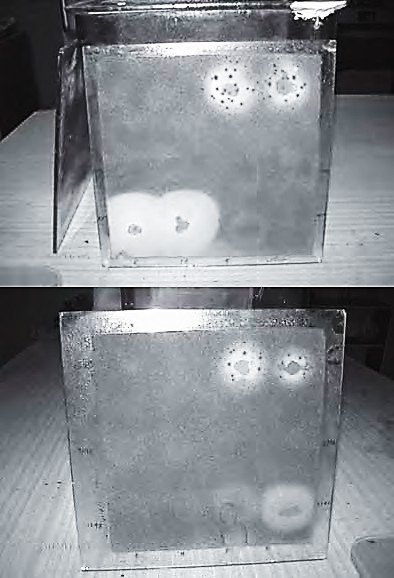
During the last years the tendency is increasing the production and commercialization of biopesticide´s uses, even for fresh crow and the treatment of a big urban areas, where the use of chemical products cause irreversible damages at environment. In this way, the microorganisms, especially fungi, are a very important organism groups with phytosanitary use, due to the high biodiversity and biosynthetic ability. On the other hand, INIFAT, has an International recognized World Federation Culture Collections (WFCC 853) over a 6,000 sample isolates from tropical forests; from those, 1032 new and little common fungi, which are a very rich unknown source. On the present paper the fungicide activity of tree new Cladobotryum strains (C. pinarense (1789), C. semicirculare (1698) y C. virescens (C10/110)) were tested against two economic Cladosporium phytopathogen species. The fungal strains were grown on potato and carrot culture-enriched by shaking condition for 5 –10 days. The cultures were leaked and evaluated by bioautographic TLC assay against pathogen species. The strains 1789 and C10/110 show a very high inhibition against Cladosporium colocasiae and C. oxysporum, and 1698 strain, just a weak. Those results are good for going on studying the strains as well as, the responsible secondary metabolites of this activity.
Article Details

This work is licensed under a Creative Commons Attribution-NonCommercial 4.0 International License.
Those authors who have publications with this journal accept the following terms of the License Attribution-NonCommercial 4.0 International (CC BY-NC 4.0):
You are free to:
- Share — copy and redistribute the material in any medium or format
- Adapt — remix, transform, and build upon the material
The licensor cannot revoke these freedoms as long as you follow the license terms.
Under the following terms:
- Attribution — You must give appropriate credit, provide a link to the license, and indicate if changes were made. You may do so in any reasonable manner, but not in any way that suggests the licensor endorses you or your use.
- NonCommercial — You may not use the material for commercial purposes.
- No additional restrictions — You may not apply legal terms or technological measures that legally restrict others from doing anything the license permits.
The journal is not responsible for the opinions and concepts expressed in the works, they are the sole responsibility of the authors. The Editor, with the assistance of the Editorial Committee, reserves the right to suggest or request advisable or necessary modifications. They are accepted to publish original scientific papers, research results of interest that have not been published or sent to another journal for the same purpose.
The mention of trademarks of equipment, instruments or specific materials is for identification purposes, and there is no promotional commitment in relation to them, neither by the authors nor by the publisher.
How to Cite
References
Bills, Gerald F.; Platas, G; Overy, D.P.; Collado, J.; Fillola, A.; Jiménez, M.R.; Martín, J.; Del Val, G.A.; Vicente, F.; Tormo, J.R.; Pelaez; F.; Calati, K; Harris, G., Parish, C.; Xu, D.; Roemer, T. Discovery of the parnafungins, antifungal metabolites that inhibit mRNA polyadenylation, from the Fusarium larvarum complex and other Hypocrealean fungi. Mycologia, 101(4): 449–472. (2009).
Cabrera, A. B.; Martínez, B. C; Díaz M. C.; Herrera, L. I. y Alonso, Y. D. Efecto de los medios de cultivo y la temperatura en el crecimiento de Cladosporium fulvum Cooke (sin. Passalora fulva). FITOSANIDAD, 10(1): 25-28. (2006).
Centraalbureau Voor Schimmelcutures(CBS). List of cultures. Fungal Biodiversity Center. 35th Edition, ISBN 90-70351- 45-5: 687 p. (2001).
Chirinos, J.; Leal, A. y Montilla, J. Uso de insumos biológicos como alternativa para la agricultura sostenible en la zona sur del estado Anzoátegui. Revista Digital CENIAP HOY, No. 11. Maracay, Aragua, Venezuela. (2006).
Cox, R.J. y Glod, F. Fungal polyketide synthases in the information age. Advances in fungal biotechnology for industry, agricultura and medicine. J.S.Tkacz y L. Lange (eds.). Kluver Academic/Plenum Publishers, Nueva York: 69-93. (2004).
Deacon, J. Fungal Biology. Edit.Blackwell. 366pp. (2005).
Heredia, G. Tópicos sobre diversidad, ecología y uso de los hongos microscópicos. Programa Iberoamericano de Ciencia y Tecnología para el Desarrollo (CYTED) e Instituto de Ecología, A.C. Xalapa, Ver. México, 386 pp. (2008).
Lago, J.H.G.; Ramos, C.S.; Casanova, D.C.C.; Morandim A de A.; Bergamano, D.C.B.; Cavalheiro, A.J.; Bolzani, V. da S., Furlan, M.; Guimaraes, E.F.; Young M.C M. and Kato, M.J. Benzoic acid derivates from Piper species and their fungitoxic activity against Cladosporium cladosporioides and C. sphaerospermun. J. Nat. Prod., 67: 1783-1788. (2004).
Singh,S.M.; Puja, G. y Bhat, D.J. Psychrophilic fungi from Schirmacher Oasis, East Antarctica. Current Science 90 (10): 1388-1391. (2006).
Thomma, B. P. H. J.; Van Esse, H. P.; Crous, P. W.; De Wit, P. J. G. M. Cladosporium fulvum (syn. Passalora fulva), a Highly Specialized Plant Pathogen As Model for Functional Studies on Plant Pathogenic Mycosphaerellacea, Molecular Plant Pathology 6(4): 379-393. (2005).