
Comportamiento de variedades foráneas y cubanas de lechuga (Lactuca sativa, L) en condiciones de Agricultura Urbana
Article Sidebar
Main Article Content
Abstract
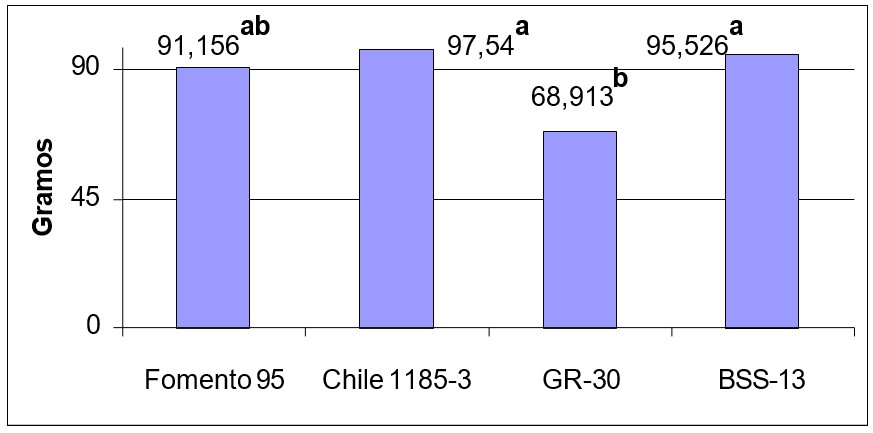
La lechuga es una de las hortalizas más consumida por la población y a la vez es uno de los productos de ciclo corto que produce buenos rendimientos, dándole ingresos al productor. Por lo que es importante el estudio de la introducción de nuevos genotipos en este cultivo. El presente trabajo tiene como objetivo estudiar el comportamiento de estos en diferentes fechas de siembra comparándolos con las variedades cubanas en huertos intensivos y organopónicos de Boyeros y Alamar. Se trabajó durante 3 años (2004 al 2006) en organopónicos del INIFAT y del CIMEX, en el huerto de la UBPC Vivero Organopónico Alamar y del INIFAT. Las siembras se realizaron en época óptima así como en primavera-verano. Con materiales tipo Iceberg o de repollo y tipo Romana o de hoja, así como cubanas de formas similares. Se realizó el procesamiento estadístico de los datos a través del paquete de diseños experimentales Fauanl versión 2.5 y la prueba de Tukey para la diferencias entre las medias. Se obtuvieron resultados interesantes bajo sistemas semiprotegidos y a cielo abierto en organopónicos y huertos intensivos. Se observa que en la época primavera- verano es cuando más difícil se hace la producción de lechuga y en donde incide de manera importante el manejo de la fecha de siembra más adecuada para cada tipo de genotipo y la distancia de siembra entre otros elementos. Con las líneas introducidas se obtienen rendimientos por encima de las variedades nacionales de 1 a 2 Kg/m2 en la mayoría de los casos. Se concluye continuar los estudios con estos genotipos.
Article Details

This work is licensed under a Creative Commons Attribution-NonCommercial 4.0 International License.
Those authors who have publications with this journal accept the following terms of the License Attribution-NonCommercial 4.0 International (CC BY-NC 4.0):
You are free to:
- Share — copy and redistribute the material in any medium or format
- Adapt — remix, transform, and build upon the material
The licensor cannot revoke these freedoms as long as you follow the license terms.
Under the following terms:
- Attribution — You must give appropriate credit, provide a link to the license, and indicate if changes were made. You may do so in any reasonable manner, but not in any way that suggests the licensor endorses you or your use.
- NonCommercial — You may not use the material for commercial purposes.
- No additional restrictions — You may not apply legal terms or technological measures that legally restrict others from doing anything the license permits.
The journal is not responsible for the opinions and concepts expressed in the works, they are the sole responsibility of the authors. The Editor, with the assistance of the Editorial Committee, reserves the right to suggest or request advisable or necessary modifications. They are accepted to publish original scientific papers, research results of interest that have not been published or sent to another journal for the same purpose.
The mention of trademarks of equipment, instruments or specific materials is for identification purposes, and there is no promotional commitment in relation to them, neither by the authors nor by the publisher.
How to Cite
References
Hazera Genetics.( 2000). Catálogo de semillas de hortalizas. Israel.
Manual Técnico de Organopónicos y Huertos Intensivos. 2000. INIFAT. GNAU. Ciudad de la Habana. 145 pp.
Puente, N. J(.2003). Caminos para una eficiente comercialización de productos agrícolas. ACTAF. LIFECYCLES. Cuba. p-35.