
Agronomic response in the cultivation of snap beans (Vigna unguiculata L. Walp.) to different conditions of water supply in the soil
Article Sidebar
Main Article Content
Abstract
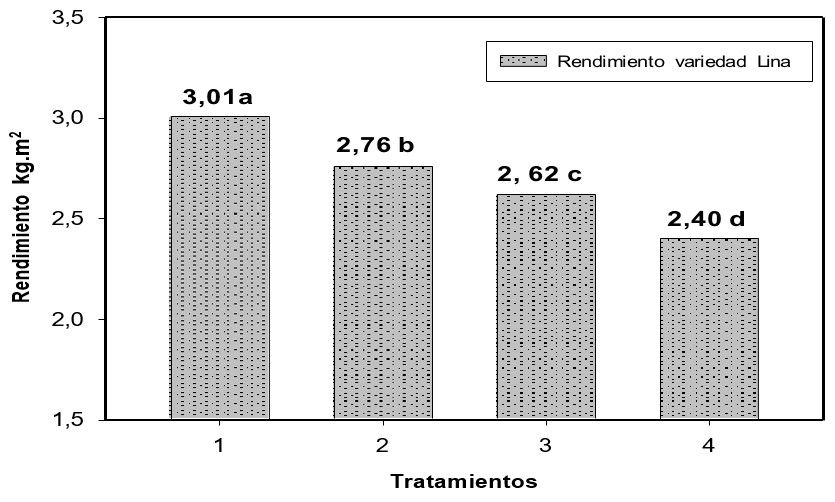
The agronomic response of two snap bean varieties to different conditions of water supply in the soil was evaluated. The investigation was carried out during the period May-July 2017 in the national reference garden ¨Ñico López¨ located next to the 18-storey building in Bayamo, Granma, Cuba. A randomized block design with four treatments and tree replicas was used. The following indicators were evaluated: Days to germination, days flowering start, days start fructification, days start green maturity, number of pods per plants, weight of pods (g), diameter of pods (mm), length of pods, reproductive index as well as the yield (kg m²), in addition the humidity of the substrate (%) was determined by the gravimetric method. When the analysis of variance revealed significant differences, mean comparisons were made through the Duncan test, with a probability of error of 5 %. The statistical processing was carried out with Statistica statistical package version 8.0 on Windows. The results showed that soil moisture produced a significant effect on the performance factors, which decrease when soil humidity is lower and more pronounced in the variety Escambray. Important conclusions were reached that the cultivation of the snap bean is demanding to the quantity of water applied, for which reason the best productive response of this crop is obtained when irrigation is maintained throughout its vegetative cycle.
Article Details

This work is licensed under a Creative Commons Attribution-NonCommercial 4.0 International License.
Those authors who have publications with this journal accept the following terms of the License Attribution-NonCommercial 4.0 International (CC BY-NC 4.0):
You are free to:
- Share — copy and redistribute the material in any medium or format
- Adapt — remix, transform, and build upon the material
The licensor cannot revoke these freedoms as long as you follow the license terms.
Under the following terms:
- Attribution — You must give appropriate credit, provide a link to the license, and indicate if changes were made. You may do so in any reasonable manner, but not in any way that suggests the licensor endorses you or your use.
- NonCommercial — You may not use the material for commercial purposes.
- No additional restrictions — You may not apply legal terms or technological measures that legally restrict others from doing anything the license permits.
The journal is not responsible for the opinions and concepts expressed in the works, they are the sole responsibility of the authors. The Editor, with the assistance of the Editorial Committee, reserves the right to suggest or request advisable or necessary modifications. They are accepted to publish original scientific papers, research results of interest that have not been published or sent to another journal for the same purpose.
The mention of trademarks of equipment, instruments or specific materials is for identification purposes, and there is no promotional commitment in relation to them, neither by the authors nor by the publisher.
How to Cite
References
Baldoquín M. (2015). Evaluación de índices para identificar genotipos de frijol común (Phaseolus vulgaris L.) con tolerancia al estrés hídrico en ambientes contrastantes. Tesis de Maestría. Universidad de Granma. 80 p.
Boudet, A.; Boicet, T. y Merino, Y. (2015). Efecto de la aplicación de abonos orgánicos en la respuesta agroproductiva del cultivo de habichuela (Vigna unguiculata L.). Centro Agrícola, 42(2):11-16.
Cha-um, S.; Batin, C.B.; Samphumphung, T. y Kidmanee, C. (2013): Physio-morphological changes of cowpea (Vigna unguiculata L. Walp.) and jack bean (Canavalia ensiformis (L.) DC.) in responses to soil salinity. Austral. J. Crop Sc., 7(13): 2128-2135.
Cun, G. R.; Montero, L. y Duarte, C. (2009): “Respuesta de la habichuela (Vigna unguiculata L. Walp.) al déficit hídrico controlado en condiciones de organopónico bajo cubierta protectora”. Revista Ciencias Técnicas Agropecuarias, 18 (4): 54-58.
Faostat (2017): Crops Cowpeas dry. Statistics division. Disponible en: http://faostat.fao.org/. Acceso a la base de datos, 26 de junio 2017.
Gardner, W.H. (1986): Water content. En: Klute, A., Campbell, G.S., Jacson, R.D., Mortland, M.M., Nielsen, D.R. (eds.). Methods of Soil Analysis. Part I, ASA and SSSA, Madison, WI, USA, pp. 493–544.
García, E.; Bravo, C.; Álvarez, P.; Valle, H.J.; García, S.; López, J. y Escobar, W. (2009): Guía técnica para el cultivo del frijol. Proyecto Innovaciones para mejorar la competitividad de la cadena agroindustrial de granos y semillas de frijol de los socios de ASOPROL. Instituto Nicaragüense de Tecnología Agropecuaria (INTA), Managua, Nicaragua, 28 p.
Hernández, A.; Pérez, J.; Bosch, D. y Castro, N. (2015): Clasificación de los suelos de Cuba Edit. Ediciones INCA, Mayabeque, Cuba, p.93
López, E.; Tosquy, O.H.; Ugalde, F.J. y Acosta, J.A. (2008): Rendimiento y tolerancia a sequía de genotipos de frijol negro en el estado de Veracruz. Revista Fitotecnia Mexicana, 31(3) Especial: 35-39.
Martin de Santa Olalla. M.F.; Fuster, P.L. y Belmonte, A.C. (2005). Agua y Agronomía. Universidad de Castilla- La Mancha. Eds. Mundi Prensa. España. 606.
Meriño, Y.; Boudet, A.; Boicet, T.; Barreiro, E.A.; Palacio, A.J. y Castillo, R. (2015): Rendimiento y tolerancia a la sequía de seis variedades de frijol común (Phaseolus vulgaris L.) en condiciones de campo. Centro Agrícola, 42(1):69-74.
Minag (2018). Listado oficial de variedades comerciales. Centro nacional de sanidad vegetal. Registro de variedades comerciales Subdirección de Certificación de Semillas, La Habana Cuba, 42 p.
Minag (2011): Manual técnico para organopónicos, huertos intensivos y organoponía semiprotegida. Instituto de investigaciones Fundamentales en Agricultura Tropical INIFAT. Séptima Edición, pp. 208. ISBN 980-215-022-3.
Moreno, J. (2009): Respuesta de las plantas al estrés por déficit hídrico. Una revisión. Agronomía Colombiana, 2 (2).179-191.
Moreno, J. (2015): Respuesta de plantas in vitro de banano cv. ‘Grande naine’ (Musa AAA) transformadas con el gen de osmotina ap24 al estrés hídrico. Tesis presentada en opción al título académico de Máster en Biotecnología Vegetal. Universidad Central Martha Abreu de las Villas. 62 p.
Orellana, R. y Ortega, F. (2007): “Del riego al manejo del agua”, Revista de Agricultura Orgánica. La Habana. 9–11.
Polanía, J.A. (2011): Identificación de características morfofisiológicas asociadas a la adaptación a sequía para ser usadas como criterios de selección en mejoramiento de frijol común (Phaseolus vulgaris L.) Trabajo de grado para optar al título de Magister en Ciencias Agrarias, Área de Fitomejoramiento Universidad Nacional de Colombia, Facultad de Ciencias Agropecuarias, Palmira, Valle del Cauca, CO. 110 p.
Seckin, B. y Merve, A. (2014): Drought Tolerance of Knotgrass (Polygonum Maritimum L.) leaves under different drought treatments. Pak. J. Bot., 46(2): 417-421.
Yarnia, M.; Arabifard, N.; Khoel, F.R. y Zandi, P. (2013): Evaluation of drought tolerance indices among some winter rapeseed cultivars. de la calidad en el grano de frijol (Phaseolus vulgaris L.). Revista Cultivos Tropicales, 27 (3): 55-62, ISSN: 0258-5936.