
Employment of Pennisetum purpureum Schumach. (Elephant grass) in the cultivation of the edible basidiomycetes Pleurotus eryngii and Pleurotus ostreatus
Article Sidebar
Main Article Content
Abstract
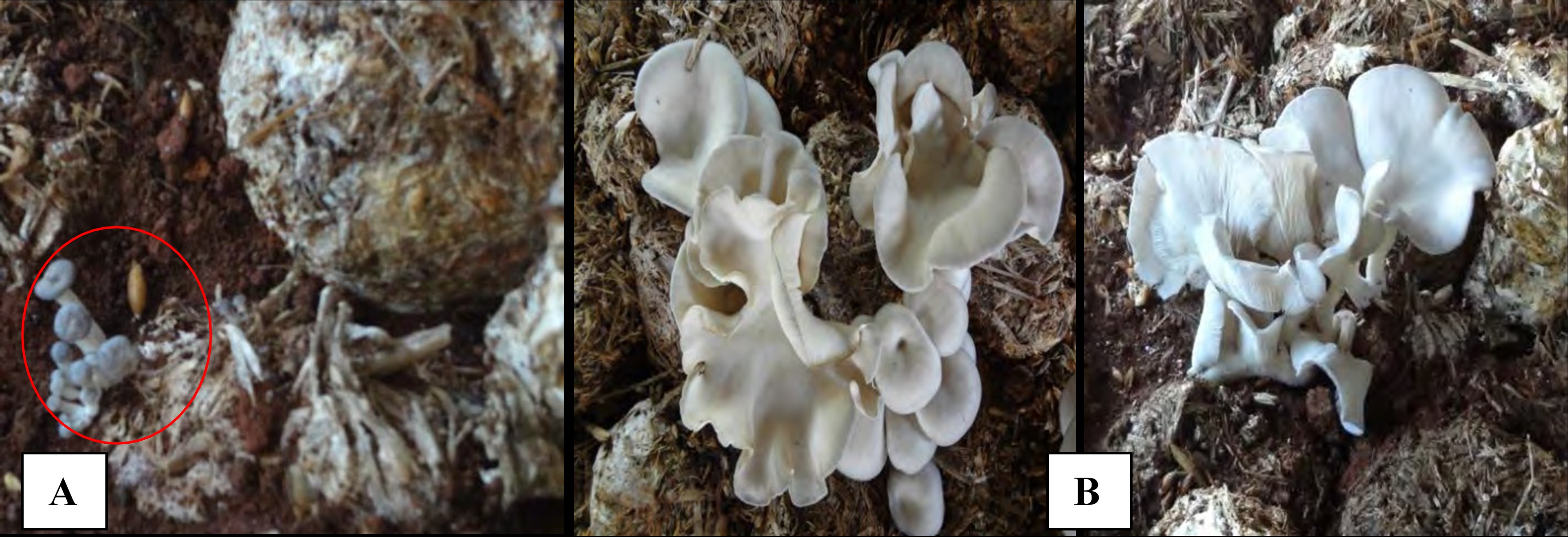
This work show the obtained results with the employment of Pennisetum purpureum (elephant grass) in P. eryngii and P. ostreatus mushrooms cultivation. The productivity of both species around 2 and 6 kg m-2 respectively in bags of 300 g of substrate after 30 days of inoculation with robust growth mycelia of 10 and 12 days after inoculation in total darkness conditions. The fructification temperature fluctuated between 18-22 oC and 28-34 oC. This technology that employing grass plants for mushroom production (called JUNCAO Technology) was implementing in the south of China since last century over the year 80 to supply the use of sawdust, which gave more quantity of nutrients to a fungus and protect the environment from the deforestation. In Cuba this grass growth wild in the rural areas potentially the growth of weeds in urban and suburban zones, for that it employment in human food production make a new use alternative with a great importance.
Article Details

This work is licensed under a Creative Commons Attribution-NonCommercial 4.0 International License.
Those authors who have publications with this journal accept the following terms of the License Attribution-NonCommercial 4.0 International (CC BY-NC 4.0):
You are free to:
- Share — copy and redistribute the material in any medium or format
- Adapt — remix, transform, and build upon the material
The licensor cannot revoke these freedoms as long as you follow the license terms.
Under the following terms:
- Attribution — You must give appropriate credit, provide a link to the license, and indicate if changes were made. You may do so in any reasonable manner, but not in any way that suggests the licensor endorses you or your use.
- NonCommercial — You may not use the material for commercial purposes.
- No additional restrictions — You may not apply legal terms or technological measures that legally restrict others from doing anything the license permits.
The journal is not responsible for the opinions and concepts expressed in the works, they are the sole responsibility of the authors. The Editor, with the assistance of the Editorial Committee, reserves the right to suggest or request advisable or necessary modifications. They are accepted to publish original scientific papers, research results of interest that have not been published or sent to another journal for the same purpose.
The mention of trademarks of equipment, instruments or specific materials is for identification purposes, and there is no promotional commitment in relation to them, neither by the authors nor by the publisher.
How to Cite
References
Kazemi, J.; Jafarpour, M.; Eghbalsaid, Sh. y Pessarrakli, M. (2016). Effects of various substrates and supplements on king oyster (Pleurotus eryngii). Compost and Utilization. ISSN: 1065-657X. http://dx.doi.org/10.1080/1065657X.2016. 1238787.
Gurelan Sociedad Cooperativa. (2018). Ficha Técnica Cultivo de seta de cardo (Pleurotus eryngii). http://gurelanmycelium.com/en/saladeprensa).
Lin, D. y Lin, Z. (2012). Reference Material for China-Aid Training Programs. Chapter 10. Pleurotus spp.. Cultivation with JUNCAO, pp.63-65.
Lin, D. y Lin, Zh. (2014). Reference Material for China-Aid Training Programs. Chapter 2. Some Popular JUNCAO Species, pp.67-68.
Lin, D. y Lin, Zh. (2014). Reference Material for China-Aid Training Programs JUNCAO Technology. Chapter 10. Pleurotus spp.. Producción de Cultivos Madres de Pleurotus spp., pp. 123-125.
Lin, J. (2013). Basic and Cultivation Technology of Edible Fungi. Chapter 6. Cultivation of Pleurotus ostreatus, pp.78- 82.
Suárez, C. A. (2016). Evaluación Agronómica y nutricional del Pasto Elefante (Pennisetum purpureum) a partir de diferentes biofertilizantes en la finca los robles de la fundación Universitaria de Popayán. Maestría en Desarrollo Sostenible y Medio Ambiente. Universidad de Manizales, Facultad de Ciencias Contables Económicas y Administrativas, 82 p.
Wenjie, Y.; Feng, L.G. y Zhengjie, W. (2013). Yield and size of oyster mushroom grown on rice and wheat straw basal substrate supplemented with cotton seed hull. Saudi J. Biol. Sci. 20(4): 333-338.
Zhang, R. Y.; Hu, D. D.; Ma, X. T.; Li, Sh. G.; Gu, J. G. y Hu, Q. X. (2014). Adopting stick spawn reduced the spawn running time and improved mushroom yield and biological efficiency of Pleurotus eryngii. Scientia Horticulturae, 175:156–9.